beehiiv vs Substack: why beehiiv wins for newsletter growth
This article contains affiliate links. We may earn a commission on qualifying purchases at no extra cost to you. Our recommendations are independent and research-driven, and we say when a pick is not hands-on.
beehiiv is our pick over Substack for anyone whose goal is growing a newsletter, not just publishing one. Substack remains the easier place to start writing and get paid subscribers with almost no setup, but beehiiv gives you the tools that compound an audience: a built-in referral program, paid recommendations that bring in new readers, native ad placement, and a flat subscription price instead of a cut of your revenue. Prices checked October 2026.
This comparison is for operators treating a newsletter as a business asset: solo writers past the hobby stage, small media teams, and marketers who need list growth they can measure. We weigh growth tooling, monetization model, analytics and segmentation, deliverability controls, design flexibility, and total cost at 1,000 and 2,500 subscribers (beehiiv's base paid-pricing bucket and its Free plan cap), and we name the few situations where Substack is still the better fit.
| Role | Tool | Why |
|---|---|---|
| Pick | beehiiv | the only one of the three with list growth and non-subscription revenue built in, at a flat price |
| Runner-up | Ghost | full ownership and no revenue cut for publishers who can run their own site |
| Budget pick | Substack | free until you charge readers, with discovery you do not have to build yourself |
How the best beehiiv vs Substack options compare
Prices checked October 2026.
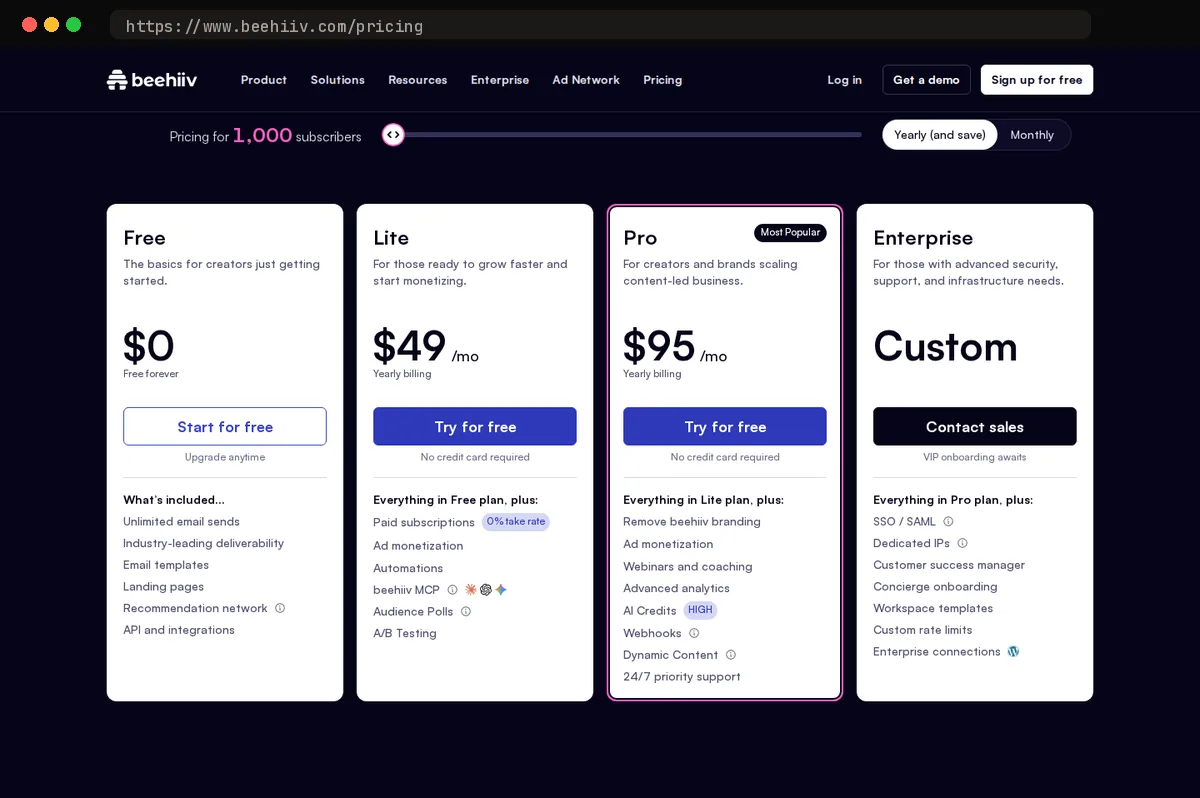
Our pick is beehiiv. Both platforms send an email newsletter with a hosted archive and paid subscriptions, but they differ on economics and tooling. beehiiv charges a monthly plan fee that steps up with subscriber count (Lite, formerly Scale, starts at $49 per month billed annually, or $59 month-to-month, for up to 1,000 subscribers) and takes no platform cut of paid-subscription revenue beyond Stripe's processing fees. It adds audience segmentation, automated sequences, reader rewards for sharing your newsletter, an ad network, and a custom domain on paid plans. Substack costs nothing to publish but keeps a 10% share of paid revenue, offers lifecycle-triggered email sequences and basic segment sends but far less automation and segmentation depth than beehiiv, gives limited design control, and has no custom domain without an extra charge. Substack's real advantage is its recommendations network and Notes feed, which can bring readers you did not earn yourself. Testing an idea? Start on beehiiv Free. Already earning paid subscriptions? beehiiv's flat fee is the cheaper arrangement.
Who each platform is built for
The honest way to read this matchup is as three different bets on what a newsletter is for, not three price points for the same thing.
Substack is a publishing network. You give up a share of every paid subscription, and in exchange you get a reader base that already exists, a recommendation graph between writers, Notes, and a start that takes about as long as creating an account. The platform does the finding for you, and it charges you for that in perpetuity.
beehiiv, our pick, is a growth and monetization stack. Pricing is a subscriber-tiered plan fee (Free $0 up to 2,500 subscribers; Lite from $49/mo billed annually or $59 monthly; Pro from $95/mo billed annually or $109 monthly, both at up to 1,000 subscribers and rising with list size) with no cut of paid subscriptions, and the acquisition tooling is built in rather than bolted on: a referral program, cross-newsletter recommendations, paid recommendations (formerly Boosts), and an ad network you can opt into once your list is large enough to matter. Nothing arrives on its own, but every lever you would otherwise stitch together from separate tools is already there.
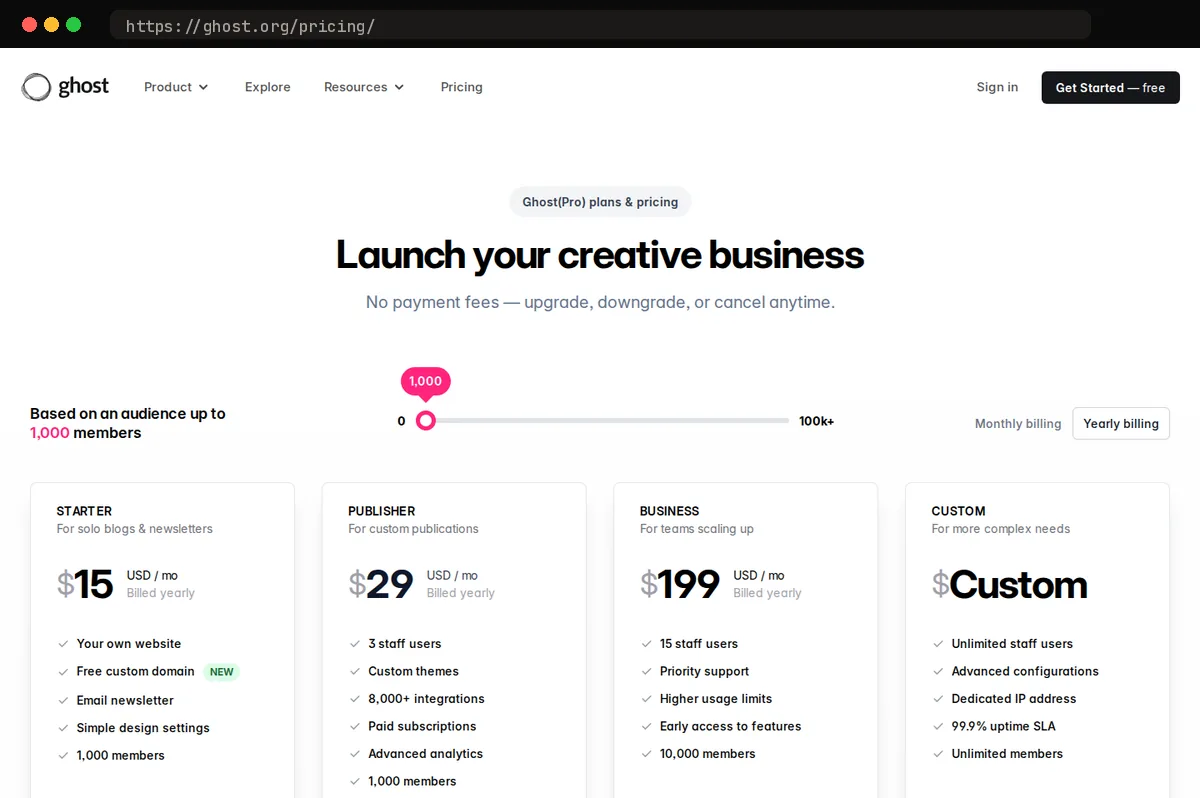
Ghost is an ownership play. It is open source, self-hostable, takes nothing from memberships, and runs a real CMS underneath the newsletter, so a site with pages, tags, and themes is the default rather than an afterthought. The cost is that you handle hosting, deliverability, and growth yourself.
The one-line test: are you optimizing for audience discovery, list growth, or control? Discovery points to Substack, control points to Ghost, and growth, the thing most operators actually need, points to beehiiv.
Audience growth and discovery
beehiiv treats acquisition as a product feature rather than something that happens to you, and four pieces stack. The built-in referral program gives every reader a unique link, lets you set milestone rewards, and tracks who earned what. The recommendation network lets you suggest other beehiiv newsletters at signup and be suggested in return, at no cost. Paid recommendations (formerly Boosts) turn that same placement into a marketplace: you set a per-subscriber price and other publishers recommend you for it, or you get paid for recommending them, with verification and engagement controls so you are not paying for dead addresses. The readers' shared referral links do the rest. The referral program is included on all paid plans (Lite and Pro), not on Free.
Here is what the loop looks like in practice. Say you have 2,000 subscribers and set a milestone of three referrals for a sticker pack. If one reader in twenty hits it, that is 100 referrers bringing 300 new subscribers, none bought with ads, and the new arrivals see the same offer. Illustrative numbers, not beehiiv's, but that is how the loop compounds.
Substack's growth is real, but it is Substack's, not yours. Recommendations between Substacks, the app, and Notes send readers your way only while you stay on the platform, and you cannot take the network with you. Ghost's growth tooling is thin, with nothing comparable to paid recommendations; growth there is SEO and your own channels, which is honest but slow.
Monetization and what each platform takes
Substack's model is the simplest to understand and the hardest to outgrow. It takes 10% of every paid subscription on top of Stripe's processing fee, and it keeps taking it for as long as your readers keep paying. There is no plan fee, so a free newsletter costs nothing.
beehiiv flips that. You pay a flat plan fee and keep all of your subscription revenue minus processing. It also adds two income sources the other two don't offer: an ad network that places sponsors in your sends, and paid recommendations (formerly Boosts), where you earn by recommending other newsletters to your readers. Both require a paid plan, Lite or Pro (both features are Lite and above), so a free beehiiv account is a publishing tool, not a business.
Ghost charges a flat hosting fee on its managed service, or nothing if you self-host, and takes no cut of memberships. Payments run through your own Stripe account, which means you own the customer relationship outright. Paid memberships need a higher managed tier, Publisher ($29/mo billed yearly), or your own server.
The crossover is plain arithmetic. A percentage cut is cheap while revenue is small and painful once it isn't, because it scales with your success while a flat fee doesn't. If you are testing whether anyone will pay, Substack's zero upfront cost is rational. If you already have paying readers, or plan to sell sponsorships, beehiiv's flat fee is the cheaper structure and the one we recommend.
Editor, design, and the website around the newsletter
beehiiv's editor is the best fit for a newsletter-first operation. It is a block editor with reusable templates, so a weekly issue with a consistent layout takes minutes rather than a rebuild each send. Polls and surveys live inside the email itself, and the responses feed back into subscriber data. On the web side, beehiiv gives you a custom domain, a website builder, and a publication home page you can actually restyle. Our pick is beehiiv because it covers both the email and the site without pushing you into a separate CMS.
Substack is the simplest to write in and the least customizable. You get a clean text editor, a logo, a color, and not much else. Every Substack site looks like every other Substack site, and that is by design. Where Substack wins is the layer around the post: comments, Chat, and Notes are built in, so a reader can reply and discuss without leaving the platform.
Ghost is the most capable as a publication CMS. Themes, full design control, tags, multiple authors, and a real blog that ranks in search put it closer to a WordPress replacement than a newsletter tool. The tradeoff is that Ghost's native comments are members-only (free or paid), so anonymous commenting requires a third-party integration, and the setup work is heavier than either beehiiv or Substack. If a searchable archive is the priority, Ghost is the strongest option; if the newsletter is the product, beehiiv remains our pick.
Analytics, segmentation, and automations
This is where the three tools stop looking alike. Once a list passes a few thousand subscribers, the questions change from "did it send" to "who opened, who clicked, who should get the next email, and what did each subscriber cost us."
beehiiv, our pick, answers those questions inside the product. You can build segments on engagement, signup source, or custom fields, run automations triggered by signup or behavior, A/B test subject lines, and see per-subscriber open and click history. There is an API for pushing subscribers in and pulling data out, so a CRM or warehouse sync is a weekend project rather than a wish list item. Plan gating matters here: Free has no live custom automations and no A/B testing, Lite includes 10 live automations plus A/B testing, and Pro includes unlimited automations plus A/B testing.
Substack is a publishing tool, not an email marketing tool. Reporting covers opens, subscriber growth, and paid conversions at the publication level, and while Substack offers lifecycle-triggered email sequences and basic segment sends, it has far less automation and segmentation depth than beehiiv. Nothing stops you from running ads to a Substack page, but you cannot easily attribute a paid signup back to the campaign that bought it or send that cohort a different onboarding sequence.
Ghost sits in between. Members can be segmented by tier and label, and open and click reporting is basic but present. Anything heavier, such as a welcome drip or a re-engagement flow, runs through Zapier or webhooks, which means a second tool and a second bill.
If you plan to spend money on acquisition and need to measure it, pick beehiiv. The other two will leave you guessing.
Ownership, portability, and switching costs
Exporting your subscriber list is table stakes: Ghost, beehiiv, and Substack all hand you a CSV of emails and signup dates on request. The real question is what you keep besides the list.
- GhostStarter*$18/mo*1,000 members
- beehiivLiteFree: plan, up to 2,500 subscri…$59/moOur pickUp to 1,000 subscribers at the quoted price
Ghost keeps the most. You run the software (self-hosted or on Ghost's managed plan), the site lives on your domain, and paid memberships bill through your own Stripe account. Leave Ghost's hosting and you are moving a database, not rebuilding a business.
beehiiv, our pick, sits in the middle. Your publication lives on a custom domain, and paid subscriptions run through your own Stripe account, so subscribers and their billing relationships travel with you. What stays behind is platform-owned growth: the recommendation network, the referral program balances, and any ad placements sourced through beehiiv. If those drive a meaningful share of your new signups, budget for a slower growth curve after a move.
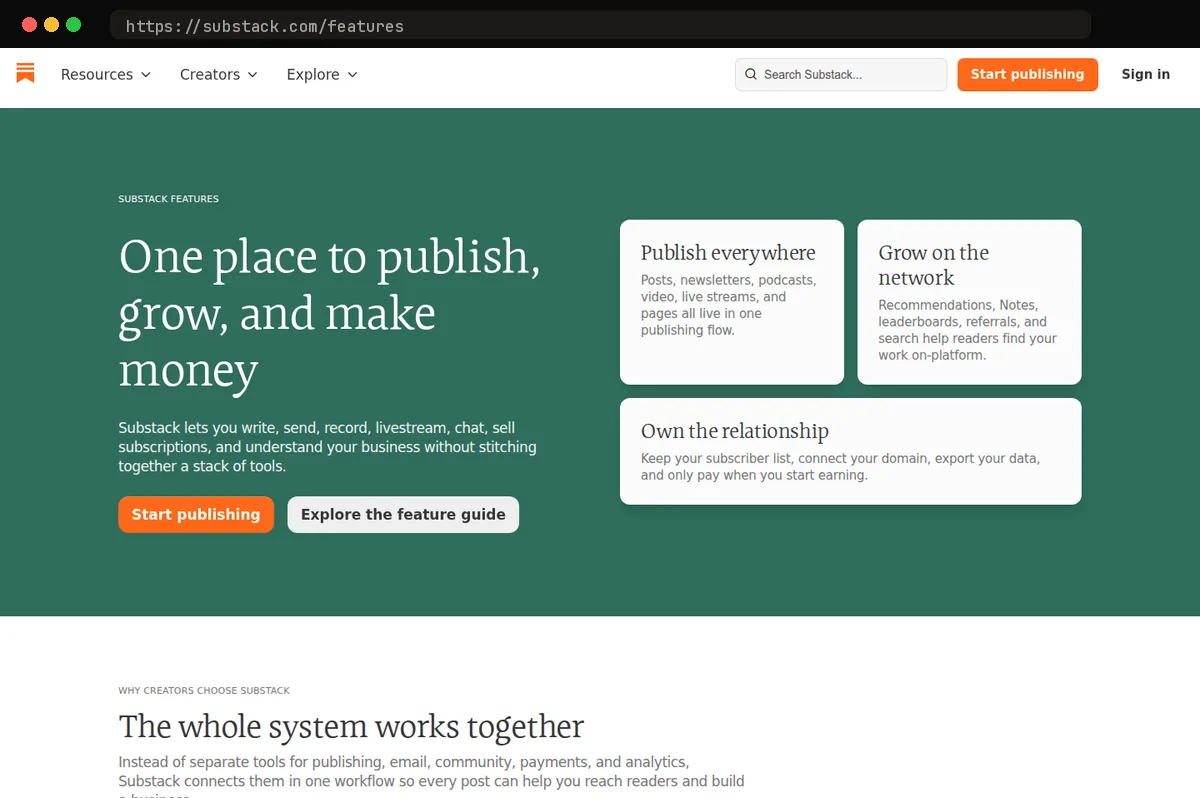
Substack holds the most. Discovery through Notes and recommendations, the app audience, and the paid-subscriber Stripe relationship all sit under Substack's umbrella. You can export subscribers, and Substack's features page says creators can export their full publication data (posts, subscriber lists, stats) at any time, but the distribution that found those readers does not come with you.
Between the three, free subscribers migrate cleanly in any direction, and both beehiiv and Ghost offer Substack import tools. What breaks every time: inbound recommendations, referral balances, and comment history, none of which survive a platform change.
At a glance
| Tool | Strengths | Tradeoffs |
|---|---|---|
| beehiiv | Flat pricing with no revenue share; built-in referral program, recommendation network, paid recommendations, and ad network; strong segmentation, automations, A/B testing, and API; custom domain and website builder. | Best growth and monetization features are gated behind paid plans; no native social or discovery layer comparable to Substack's network; growth tooling is platform-bound and does not travel with you. |
| Substack | Free to publish with zero setup; built-in discovery through recommendations, the app, and Notes; native comments and community features; the simplest editor for writers who just want to write. | Takes a percentage of paid subscription revenue; minimal segmentation, automation, and analytics; limited design control; distribution depends on a network you do not own. |
| Ghost | Open-source and self-hostable; no platform cut on memberships, paid through your own Stripe; a full CMS with themes, SEO, and multi-author support; the strongest ownership story of the three. | Self-hosting requires server management and real operating cost; paid memberships require a higher managed tier; weak built-in growth and discovery; native comments are members-only, so anonymous commenting needs an integration. |
Bottom line
beehiiv is our pick for anyone who treats a newsletter as a business rather than a blog. It gives you audience segmentation, automations, a real website, and analytics that Substack still doesn't match, and it bills a flat plan fee instead of taking a share of your paid subscriptions, so the economics improve as you grow. The main caveat: Substack's reader network and recommendation system genuinely send new subscribers to writers, and beehiiv can't replicate that. If you're starting from zero with no existing audience and plan to publish only text, Substack's zero-cost start is defensible. Everyone else should pick beehiiv.
Related guides
This article contains affiliate links. We may earn a commission on qualifying purchases at no extra cost to you. Our recommendations are independent and research-driven, and we say when a pick is not hands-on.
Test Picked Editorial
Edited by Adam Ryan. Gear picks come from equipment running in his own homelab and workshop. Software picks are researched comparisons.


